
CONSULTANCY TO FACILITATE THE DEVELOPMENT OF “A ROADMAP FOR THE SUSTAINABILITY OF THE CO-CREATE PROJECT”
November 7, 2025Voices Beyond Silence: Stories, Essays & Poems on Safe Abortion and Reproductive Justice Among Women Sex Workers And Gender Expansive Persons in Uganda
May 19, 2026
Defying the Pushback, and Reclaiming Power: A Debrief and Our Reflection on Women Deliver 2026
Where It All Began
The Women Deliver Conference has long stood as the world’s most significant stage for gender equality, health, and the fundamental rights of girls and women. Held every three years, this global convening acts as a vital heartbeat for activists and grassroots organizations, providing a space to share lived experiences and shape the policies that govern our lives. While its core remains firmly rooted in sexual and reproductive health and rights (SRHR), the conference bravely tackles the intersecting crises of our time, from gender-based violence and economic justice to the urgent pressures of climate change, always through the lens of radical inclusion.
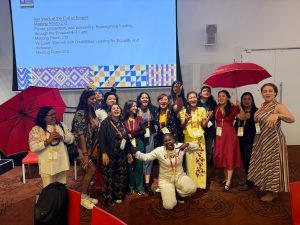 In 2026, the Women Deliver conference found it’s Sixth time occurrence in Narrm (Melbourne), Australia, unified by the powerful rallying cry, “Change Calls Us Here.” It served as a historic turning point for global solidarity, intentionally centering the wisdom of First Nations leaders and grassroots activists from across the world.
For the Alliance of Women Advocating for Change (AWAC), this was not just another conference. It was a critical platform to amplify the voices of those often pushed to the shadows – the grassroots sex workers, women affected by displacement (due to humanitarian crises), and gender-expansive persons, including the LBQ womxn community. Within this high-level policy discussion space, AWAC moved with a spirit of Solidarity, Resistance, and Reimagination, ensuring that our community was not just part of the topics of discussion, but also lead in some of these discussions, this was evident through the side event that was organized by the AWAC Uganda, themed “Defying the Pushback”.
As Laura Jensen, from Act Church of Sweden, aptly noted: “We are meeting in rapidly changing and increasingly challenging global, regional, and national contexts. Hard-won achievements for gender justice and women’s rights – including sexual and reproductive health and rights – are under serious threat. Across regions, we are witnessing a deep and relentless pushback.”
The “Defying the Pushback” side event became more than a side event dialogue session. It became a platform for sharing grassroots innovations, documenting lived experiences, and building global learning across movements. Participants spotlighted the everyday struggles faced by sex workers, women in humanitarian contexts, women who use drugs, and LBQ womxn, especially within environments shaped by criminalization, stigma, violence, restrictive laws, and shrinking civic spaces.
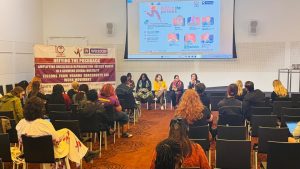
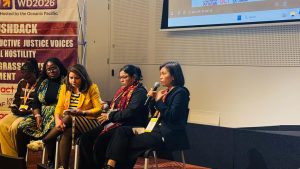 “Defying the Pushback” comes at a crucial moment when anti-rights actors and conservative political movements are becoming increasingly organized, strategically positioned, and influential across many countries. Initiatives such as the expanded Global Gag Rule, Trump’s Project 2025, and related funding restrictions continue to undermine community-led SRHR programs, silence grassroots feminist movements, and limit the critical resources needed to protect and advance the rights and SRHR needs of marginalized women and communities.
Unpacking the Conversations and Realities through Voices, Insights, and Shared Experiences
Within this difficult context, Women Deliver 2026 became a space for resistance, strategy, and hope. Through sessions such as “Sex Work at the End of Empire” and “Transforming Power, and Restoring Reproductive Agency,” activists collectively reflected on how systems of oppression continue to shape access to bodily autonomy, healthcare, justice, and dignity. Conversations explored issues such as coercion, sexual violence, stigma, reproductive injustice, financial abuse, and institutional discrimination, while also imagining new frameworks rooted in care, justice, and community leadership.
One of the strongest messages emerging from the conference was the urgent need to place grassroots lived experiences at the centre of global advocacy agendas. Participants repeatedly emphasized that policy conversations often fail when they exclude the realities of those most affected by injustice. Through creating space for and centering these voices, the conference emphasized the need to make sure that the experiences and needs of sex workers, gender-diverse persons, displaced communities, and other marginalized groups are meaningfully included in global feminist and sexual and reproductive health and rights movements.
At the same time, the conference discussions through side events such as “Resourcing Feminist Futures: Power, Politics, and the Future of Funding” showed the importance of movement sustainability. It was noted that, Many grassroots organizations continue to operate under immense pressure while facing burnout, harassment, financial instability, and political hostility. Yet despite this reality, mental health and psychosocial support remain significantly underfunded within many activist spaces. Participants stressed that movements cannot survive on passion and sacrifice alone. Sustainable feminist organizing requires long-term investment in healing, wellbeing, economic empowerment, and collective care.
Another major focus that emerged was the importance of intergenerational engagement and intersectional organizing. Young activists, including from gender expansive community are increasingly shaping new conversations around identity, gender diversity, digital advocacy, and bodily autonomy. Women Deliver therefore created opportunities for older and younger generations of feminists to learn from each other and strengthen collective resistance.
The presence of donors and philanthropic organizations within these conversations also created meaningful opportunities for dialogue around progressive funding models, example through a session on “Mobilizing alternative and emerging resourcing models” and “Defying the Pushback” side events. Organizations such as Global Fund for Women shared reflections on feminist and participatory grant-making approaches that prioritize flexibility, trust, and grassroots leadership, to defend SRHR work. These conversations resonated strongly with many activists, such as Macklean Kyomya –Execuctive Director, AWAC Uganda, who emphasized the importance of funding models that support not just projects, but the long-term sustainability and resilience of movements.
Our participation also inspired broader conversations around economic empowerment and sustainability within marginalized communities. Grassroots activists from Kenya, Nepal, and even Scarlet Alliance — reflected on the importance of integrating livelihood strategies and economic justice into feminist organizing. These discussions reinforced the understanding that communities cannot meaningfully resist oppression while trapped within systems of economic vulnerability and exclusion.
One issue that strongly emerged throughout the discussions was the lack of investment in mental health and wellbeing within activist spaces. Many organizations working in SRHR and human rights are constantly responding to trauma, violence, stigma, arrests, harassment, and community crises. Yet very few institutions intentionally budget for mental health support for staff, activists, and community leaders. This gap has serious consequences. Burnout, emotional exhaustion, secondary trauma, and activist fatigue continue to affect many frontline defenders. Grassroots activists are often expected to remain strong while carrying the emotional weight of supporting communities facing criminalization, violence, poverty, and exclusion.
Participants emphasized that movement sustainability is not only about funding projects or activities. It is also about sustaining the people behind the movements. Without emotional and psychosocial support, many activists eventually become overwhelmed.
There was also an important conversation around intersectionality and the need for stronger intergenerational engagement. Younger activists are increasingly engaging with issues around gender identity, bodily autonomy, queer rights, and feminist organizing in new and creative ways. However, there remains a disconnect between older generations of activists and younger organizers, particularly around conversations concerning gender-expansive persons, sex work, and evolving understandings of identity and inclusion.
Participants stressed the importance of intentionally creating spaces where different generations can learn from one another. Older activists bring movement history, political strategy, and institutional memory, while younger activists bring innovation, digital advocacy skills, and fresh perspectives on identity and justice. But also this is part of preventing “idea fatigue” from the older movement activists.
Another major discussion focused on holistic empowerment. Participants agreed that movements cannot focus only on advocacy while ignoring the economic realities of marginalized communities. Many sex workers, LGBTQ+ persons, and vulnerable women face extreme financial insecurity, which limits their ability to participate fully in activism and leadership.
Organizations such as AWAC shared experiences around integrating economic empowerment into movement work. This model attracted significant attention from global partners and activists from Kenya, Nepal, and even the Scarlet Alliance in Australia, one of the world’s largest sex worker advocacy movements. It was noted that, “Economic justice is feminist justice. Communities cannot meaningfully resist oppression when they are trapped in cycles of poverty and dependence.”
Participants also appreciated the presence of donors and philanthropic organizations within movement conversations. Instead of donors remaining distant funders, there was value in having them directly listen to grassroots experiences. Organizations such as Global Fund for Women, Act Church of Sweden, Nurture retreat and wellness centre, Urgent Action Fund -Africa, Canadian Government, and representatives from the Austrian Government engaged openly with activists about progressive funding approaches and sustainable movement support.
Discussions from spaces such as the Sex Work Networking Zone emphasized the need for flexible, multi-year funding grounded in feminist funding principles. Grassroots organizations repeatedly highlighted how restrictive short-term funding weakens sustainability and limits long-term impact.
The conversations also touched on reproductive violence and the many ways it manifests globally. Participants reflected on issues such as coercion, rape, stigma, shame, obstetric violence, forced contraception, financial abuse, and judgmental healthcare systems. These forms of violence continue to deny many people their reproductive agency and dignity.
From Advocacy to Action: Movement strengthening and Resourcing Grassroots SRHR Movements
The conference demonstrated that grassroots movements remain the backbone of SRHR advocacy globally. Despite operating within hostile political environments, many grassroots organizations continue to lead powerful resistance efforts and create meaningful community change.
One important lesson was the value of lived experience leadership. Grassroots activists are often closest to the realities affecting marginalized communities. Their voices bring authenticity, urgency, and credibility into advocacy spaces. AWAC’s engagement at Women Deliver became an example of how grassroots organizations can influence global conversations. Through side events such as “Defying the Pushback,” activists from Uganda and Nepal shared lived experiences of resisting attacks on SRHR and defending bodily autonomy in increasingly hostile environments. These conversations inspired activists from other regions and reinforced the importance of solidarity across movements. Participants from Kenya, Nepal, and Australia connected around shared struggles related to criminalization, stigma, and funding restrictions.
The sessions also highlighted how participatory and feminist grant-making approaches can help ensure resources reach the communities most affected. Global Fund for Women, through its President and CEO, PeiYao Chen, shared examples of progressive funding models that embrace feminist principles of grant making through prioritizing trust, flexibility, and grassroots participation. This resonated deeply with many participants who have experienced the limitations of rigid donor systems. Several activists stressed that grassroots organizations should not only be viewed as beneficiaries but also as strategic leaders capable of shaping funding priorities and movement agendas.
Another key discussion centered on the increasing pushback against SRHR globally. Participants highlighted how anti-rights movements are becoming more organized and politically influential. Policies such as the Global Gag Rule continue to negatively affect access to abortion services, advocacy, and SRHR programming. There was particular concern about the expansion of these restrictions beyond abortion-related work to also include Diversity, Equity, and Inclusion (DEI) programming. Participants viewed this as part of a broader attempt to silence progressive movements and restrict civic organizing spaces. At the same time, participants emphasized the importance of reclaiming power through collective action, strategic communication, storytelling, and solidarity building.
“The future of feminist organizing belongs to movements that are bold enough to collaborate, share power, and centre lived experiences.”
Contestations and Strategic Positioning for Grassroots Movements in Times of Crisis
Despite the progress being made, the conference also revealed ongoing contestations around issues such as sex work, LGBTQ+ rights, and abortion. In many contexts, these topics remain highly stigmatized and politically sensitive. Many organizations still fear openly addressing them due to funding risks, legal restrictions, and social backlash. However, participants agreed that silence only deepens stigma and exclusion. Creating visible spaces for dialogue remains essential.
At the same time, there was widespread concern about shrinking civic space globally. Activists noted increasing restrictions on advocacy, surveillance of civil society organizations ie on their funding sources (with Uganda as an example through the recently passed Protection of Sovereignty Bill, 2026) and funding limitations affecting feminist and human rights movements. This reality requires movements to become more strategic, collaborative, and innovative in how they organize and sustain themselves.
Side events emerged as particularly powerful spaces for honest engagement, which allowed participants to openly discuss difficult realities, share lived experiences, and challenge dominant narratives.
The Learnings from Women Deliver 2026: What This Means for the Future of Grassroots Movements and SRHR Feminist Organizing
One of the biggest takeaways from the conference was that even the way funding is designed can either lift people up or quietly keep inequality in place. Many grassroots and feminist groups, including networks reflected on how most funding still sits in the hands of big institutions. This often leaves little room for grassroots voices to lead, decide, and shape their own priorities. The learning here was clear: funding should not just be about giving money, but about building trust, sharing power, and making sure communities themselves are at the center of decision-making. This implies we have to continue the embracing the localization agenda for example in SRHR movements like the East Africa Abortion Movement (EAAM), and the humanitarian consortiums among others,
 Another important learning came from grassroots organizations like AWAC, who shared real-life experiences of how shifts in donor funding can deeply affect communities on the ground. They explained that when some bilateral funding was withdrawn due to growing political and religious pushback on abortion and DEI-related rights –following broader policy shifts such as the Trump-era Project 2025 direction, stop-work orders, and the reinstatement of the Mexico City Policy in January 2025—it didn’t only affect organizational budgets and programming. Instead, the impact was deeply human. It directly reduced access to abortion-related services and essential sexual and reproductive health information for over 9700 women and and girls, and gender expansive persons who rely on these services the most. This reflection made it very clear that decisions made in distant political spaces can quickly travel across borders and end up shaping very personal realities, deciding who gets care, who gets information, and who is left to struggle without support.
Language is in feminist and movement work. The words we choose when talking about things like economic empowerment, reproductive justice, and community strength are not neutral. They can either open doors for marginalized communities or quietly shut them out. Framing matters because it shapes who feels seen, included, and worthy of support.
There was a growing recognition that feminist movements become stronger when they embrace integration, intersectionality, and inter-movement solidarity. Marginalized communities are deeply interconnected, and their struggles often overlap, meaning isolated movements can weaken collective resistance. Throughout the conference, cross-movement collaboration was seen not only as a strategy for advocacy, but also as a source of strength, healing, shared learning, and collective power. When feminist and grassroots groups come together to support one another and share knowledge, their voices become louder, more united, and far more difficult to ignore.
We explored alternative resourcing models beyond traditional donor funding. Ideas such as cryptocurrency fundraising, Bitcoins, endowment funds, partnerships with private institutions, and engagement with multilateral financial institutions like the World Bank were discussed as potential ways of diversifying movement resources and reducing dependency.
Beyond Melbourne: Where Do We Go From Here?
Moving forward, participants through sessions such as the “Defying the Pushback” proposed several important follow-up actions aimed at strengthening feminist movements and grassroots organizing.
There was strong interest in organizing future plenary sessions dedicated specifically to discussing SRHR pushbacks ie on sex work, and feminist resistance beyond side events. Participants felt these conversations deserve greater visibility within global conferences.
Participants proposed and committed to push for an online dialogue with key stakeholders regarding PEPFAR’s position on post-abortion care and broader SRHR funding concerns.
Participants further proposed establishing stronger collaborations with organizations such as Scarlet Alliance around joint fundraising, advocacy campaigns, and global solidarity initiatives.
Continuing to document emerging global threats to SRHR. Participants emphasized the need for movements to closely monitor evolving anti-rights policies and develop coordinated strategies that enable early narrative disruption and stronger collective resistance.
We were reminded that feminist futures cannot be built in isolation. They require solidarity, shared power, sustainable funding, intergenerational collaboration, and community-led leadership.
